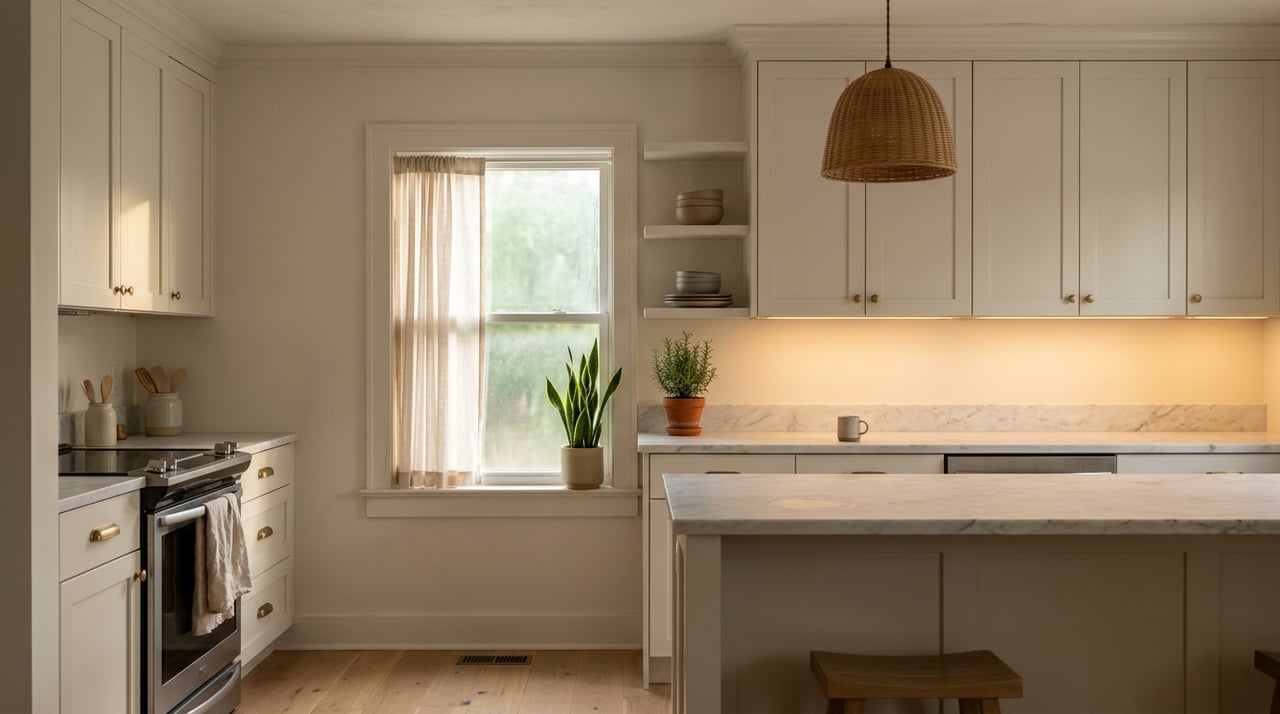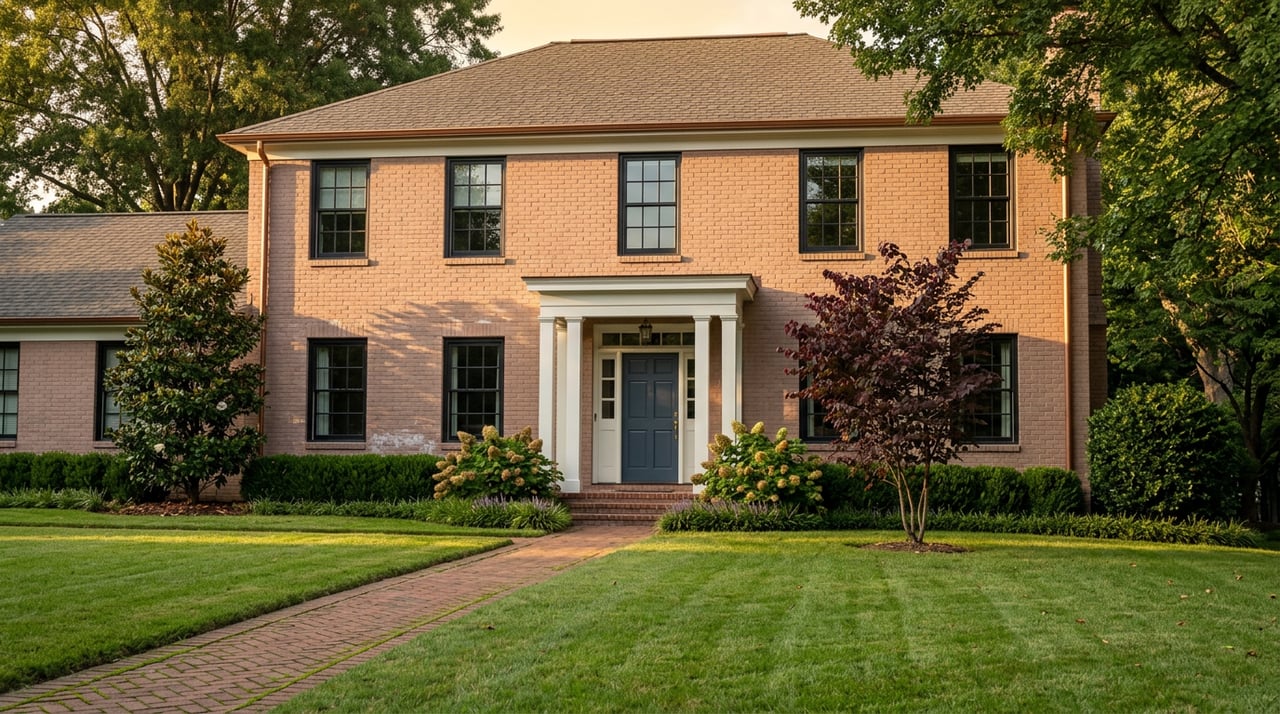
"Quieter atmosphere and county-tax location." That phrase shows up, almost word for word, across the builder pages and listing sites marketing Wexford Reserve. It sounds like a bonus. It reads like a feature next to the pool-ready homesites and the chef kitchens. What it never does is explain itself.
If you're comparing a custom build in Wexford Reserve against a resale inside Wake Forest's town limits, that unexplained phrase is worth stopping on. It isn't a lifestyle descriptor. It's a jurisdiction, and jurisdictions come with rules, tradeoffs, and a dollar figure you can actually calculate before you write an offer.
The Status Behind the Phrase
Wexford Reserve sits in Wake Forest's extraterritorial jurisdiction, usually shortened to ETJ. That's a specific legal category in North Carolina: land outside a town's corporate limits where the town's planning and zoning rules still apply, but residents pay county property tax instead of municipal tax, and they can't vote in town elections. Wake Forest Matters, the independent local newsroom that covers town growth, named Wexford Reserve directly as one of the newer communities sitting in the ETJ and advised buyers to confirm a property's jurisdiction before purchasing rather than assume.
That advice matters because ETJ status isn't visible on a home tour. The house looks the same whether it sits on the town side of a line or the county side. The zoning that governed how it was built is identical either way, since Wake Forest's development rules extend into the ETJ. What changes is the tax bill, the services, and the vote.
What the Rate Gap Is Actually Worth
Here's where the marketing language turns into arithmetic. For fiscal year 2026-27, Wake County's Board of Commissioners adopted a base property tax rate of 53.71 cents per $100 of assessed value, a two-cent increase over the prior year. A property inside Wake Forest's corporate limits pays that county rate plus the town's own municipal rate, for a combined rate of roughly 95.71 cents per $100. A property in the ETJ, like Wexford Reserve, pays the county rate plus a fire district tax instead of the municipal rate. Fire district rates in Wake County generally run 10 to 13 cents per $100, which puts an unincorporated ETJ property's combined rate somewhere around 64 to 67 cents per $100.
That's a gap of roughly 29 to 32 cents per $100 of assessed value.
| Rate per $100 assessed value | |
|---|---|
| Wake County base (FY26-27) | $0.5371 |
| Wake Forest municipal add-on | ~$0.4200 |
| Combined, inside Wake Forest limits | ~$0.9571 |
| Fire district (ETJ, typical range) | $0.10-$0.13 |
| Combined, Wexford Reserve (ETJ) | ~$0.64-$0.67 |
Run that against Wexford Reserve's actual price points. Custom homes here have listed from roughly $1.3 million to $1.8 million, per builder marketing for the community. On a $1.5 million assessed value, a 30-cent gap works out to about $4,500 a year. On the lower end of that price range, it's closer to $3,900. On the higher end, closer to $5,400. That's not a rounding error. It's a meaningful annual number that a buyer comparing Wexford Reserve to an equivalently priced home inside Wake Forest's town limits should be running before they get attached to a floor plan.
Assessed value, not sale price, is what the rate actually applies to, and Wake County's Tax Assessor sets that figure independently. For new construction, the two tend to track closely at first assessment, but they aren't guaranteed to match exactly. Wake County's last countywide revaluation, in 2024, pushed many assessed values up 30 to 50 percent, and the next one is scheduled for 2027. Anyone buying now should expect that number to move again before long, which changes the dollar gap even if the rate spread between town and county stays roughly the same.
The Quiet Comes With Trade-Offs
The lower tax bill isn't free. Being in the ETJ means you don't get a vote on the Wake Forest Board of Commissioners, the body that sets the very municipal rate you're not paying. It also typically means going without town-provided trash collection, and depending on the specific road and utility agreements for the subdivision, potentially different arrangements for streetlights and water or sewer than you'd get on the town side of the line. None of this makes Wexford Reserve a worse buy. It makes it a different bundle of costs and services than a comparably priced home inside Wake Forest proper, and that bundle deserves to be evaluated on its own terms rather than assumed away by a phrase like "quieter atmosphere."
Meanwhile, the town side of that same line is actively growing. Wake Forest is funding an $18 million Fire Station 6 along its fastest-growing corridor, Wait Avenue and Averette Road, paid for in part by the municipal tax rate that ETJ residents don't contribute to. That's not a criticism of either arrangement. It's simply the other side of the ledger: town tax dollars build town infrastructure, and ETJ residents are opting out of that specific funding stream while still living close enough to benefit from the town's restaurants, parks, and general growth.
The Law That Just Paused the Clock
There's a legislative wrinkle here that most listing copy has no reason to mention, but that matters if you're planning to own this home for more than a couple of years. In its 2025 session, the North Carolina General Assembly passed Senate Law 30, which prohibits municipalities in Wake County from expanding their extraterritorial jurisdiction until December 31, 2028. That freezes the mechanism towns typically use to bring new unincorporated land under their zoning umbrella before eventually annexing it into full town limits.
That freeze doesn't mean Wexford Reserve itself is protected from ever becoming part of Wake Forest. Annexation of land already inside an existing ETJ is a separate process from ETJ expansion, and a property owner can still petition voluntarily to be annexed, or the town could pursue contiguous annexation under its own procedures if the neighborhood ever bordered its limits directly. What the freeze does mean is that the broader trend of unincorporated land getting pulled into municipal reach has slowed at the state level, at least through 2028. There's no automatic clock ticking toward annexation here. If the tax status changes, it will be because of a specific vote or petition, not because of quiet expansion happening in the background.
Four Things to Confirm Before You Write an Offer
- Ask the closing attorney or your agent to confirm, in writing, whether the specific parcel sits inside Wake Forest's town limits or in the ETJ. Don't rely on the community's marketing language.
- Pull the current combined tax rate for that exact parcel from Wake County's Tax Administration site, since fire district rates vary by district and year.
- Ask what services the HOA covers versus what the county or fire district provides, particularly trash collection and road maintenance.
- Factor in the 2027 revaluation cycle when budgeting long-term, since assessed values across Wake County are due for another reset.
Frequently Asked Questions
Does every home in Wexford Reserve pay the same tax rate? Not necessarily. Rate depends on the specific parcel's jurisdiction and fire district, and those can vary even within a single subdivision depending on phase and boundary lines. Confirm the parcel-specific rate rather than assuming a community-wide number.
Could Wexford Reserve eventually be annexed into Wake Forest? It's possible in theory, through either a town-initiated contiguous annexation or a voluntary petition from property owners, but nothing in current law forces it. The 2025 state freeze on ETJ expansion doesn't directly address annexation of land already in the ETJ, so this remains a matter of local decision-making rather than an automatic outcome.
How do I find out if a property is inside town limits or the ETJ? The most reliable path is asking your closing attorney to verify parcel status directly with Wake County records, since jurisdiction lines don't always match a buyer's assumptions based on address or subdivision name alone.
Tax rates, zoning status, and legislative freezes are exactly the kind of details that get lost between a builder's sales pitch and a buyer's closing table. If you're weighing a custom build in Wexford Reserve against options elsewhere in Wake Forest, Build the Life can walk through the actual numbers for a specific parcel and help you understand what you're buying beyond the floor plan. Schedule a consultation to start with the facts that matter for your decision.