If you want a downtown that feels easy to enjoy without giving up convenience, Downtown Cary stands out quickly. You get a historic core, everyday gathering spaces, arts venues, dining, and transportation options in one compact area. For buyers, sellers, and relocating households, that mix can be hard to find in the Triangle. Here’s how Downtown Cary in 27511 blends small-town charm with urban access, and what that means for your move.
Downtown Cary’s identity feels intentional
Downtown Cary’s appeal is not just a lucky mix of old and new. The Town of Cary describes it as a vibrant, sustainable, historic, pedestrian-oriented urban downtown with office, residential, retail, entertainment, civic uses, and a multi-modal transportation hub.
That official vision helps explain why the area feels balanced. It is designed to be a place where you can live, work, visit, recreate, and shop, rather than a single-purpose district built around just one activity.
For you as a buyer or seller, that matters. It suggests Downtown Cary’s character is being shaped with long-term planning, with walkability, mixed use, and daily livability at the center.
Small-town charm starts with gathering places
One of the clearest examples is Downtown Cary Park. This seven-acre park sits in the heart of downtown, surrounded by Academy, Walker, Park, and Walnut Streets, and gives the area a true community focal point.
The park includes play structures, public art, a dog park and bark bar, open spaces, a great lawn, a pavilion, and a gathering house and garden. The Town says the pavilion and lawn can host movies, yoga, and other events, which adds steady activity without making downtown feel hectic.
That everyday use is a big part of the charm. The park also supports pop-up markets, food trucks, and the Cary Downtown Farmers Market, so it functions as more than a green space. It gives downtown a practical place to meet, shop, and spend time.
Arts and culture are part of daily life
Downtown Cary also has a strong cultural layer that helps it feel established and connected. The Cary Arts Center at 101 Dry Avenue includes a 431-seat theatre, classes and camps, gallery exhibitions, history and public art programming, and studio arts.
Nearby, the Page-Walker Arts & History Center adds educational programming, rotating history displays, special events, and landscaped garden space. Together, these venues give downtown more depth than a typical suburban main street.
The Cary Theater adds another dimension. Located on East Chatham Street, it was restored in 2014 and now hosts independent film, comedy and improv, live music through the Six String Presents series, and other events.
Urban access shows up in the way you move around
A downtown can feel charming, but still be frustrating if getting around is difficult. Downtown Cary works because it combines a walkable layout with practical access points.
The Town of Cary says downtown has more than 2,000 free parking spaces close to shopping, dining, and entertainment. In many cases, you can park within a short walk of where you want to go, which makes casual visits easier.
That convenience supports the area’s urban feel without requiring a big-city parking routine. You can enjoy a compact district while still having car access when you need it.
Fare-free local transit adds convenience
GoCary’s Downtown Loop provides fare-free service through the heart of downtown. It connects key destinations including Cary Town Hall, Downtown Cary Park, and Chatham Street between the roundabouts.
For residents and visitors, that helps downtown feel connected and easy to navigate. It is another reason the area works well for people who want flexibility in how they get around.
Rail access strengthens the downtown core
Cary’s Amtrak station is located at 211 North Academy Street in downtown. That rail connection adds a layer of regional access you do not find in every suburban downtown.
The Town is also planning a Downtown Cary Multi-Modal Center to accommodate local and regional bus service, Bus Rapid Transit, future commuter rail, and Amtrak intercity passenger rail. Just as important, the broader vision includes serving pedestrians, bicyclists, bus transit, trains, and motorists in one connected hub.
For you, that means Downtown Cary is not only pleasant to walk. It is also being shaped to support more connected movement over time.
The housing mix reflects both history and change
Downtown Cary’s small-town feel is closely tied to its historic fabric. The Downtown Cary National Register Historic District covers 18 acres and includes 30 historic dwellings, domestic outbuildings, and the Old Cary High School building, with a period of significance from 1890 to 1945.
That historic layer helps explain why parts of downtown still feel rooted and human in scale. You can see evidence of an older residential pattern rather than a district built all at once.
At the same time, the area is not frozen in place. Downtown planning documents describe nearby development patterns as a mix of housing, office, and retail, including single-family townhomes with green spaces and sidewalks, high-density housing near transit, and walkable context-sensitive development.
Buyers should expect variety, not volume
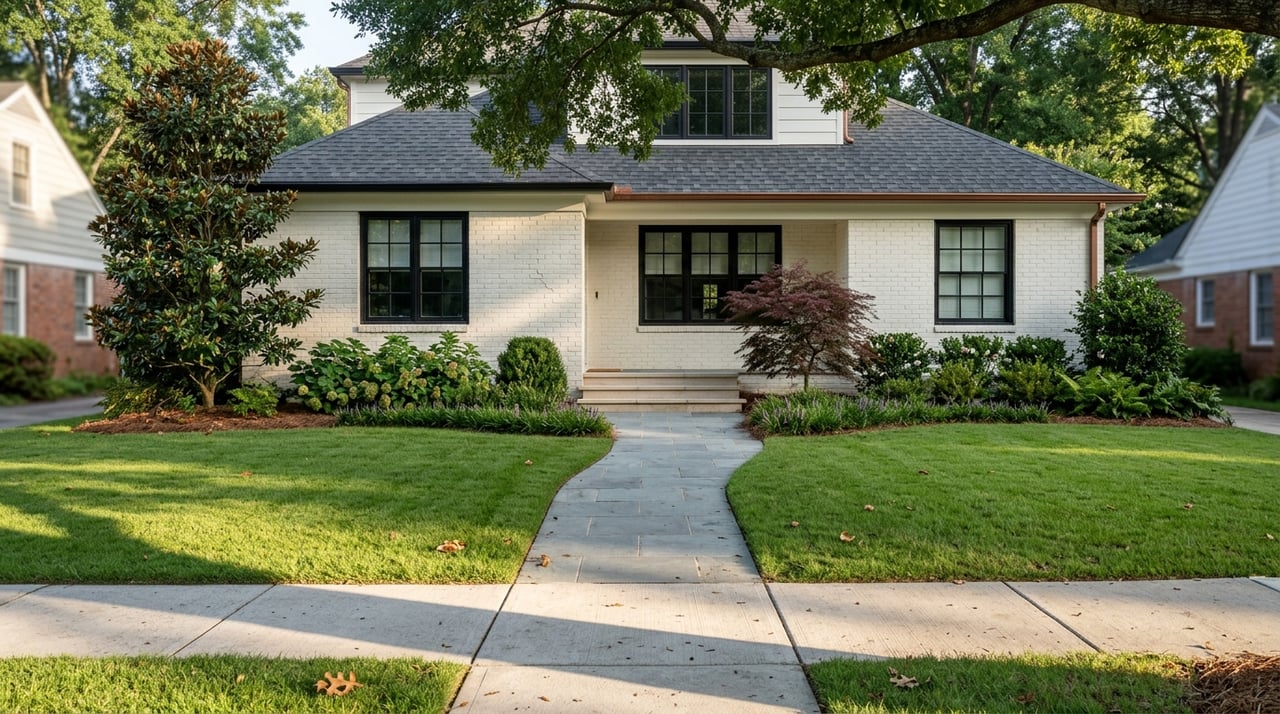
If you are home shopping near the core, the biggest takeaway is that Downtown Cary offers a more varied housing mix than a typical neighborhood. You may find older homes, townhomes, apartments, and newer mixed-use residences within a relatively tight area.
The tradeoff is supply. The immediate downtown market is generally smaller than broader suburban Cary, and much of the newer growth is happening through infill and mixed-use redevelopment rather than large single-family subdivisions.
Current projects reinforce that pattern. The 2026 State of Cary cites Meridian East, a five-story mixed-use development with 220 residential units and ground-floor retail, and Meridian Cary, a mixed-use development planned with 195 multifamily units.
That mix can be appealing if you want lifestyle access first. It can also make decision-making more nuanced, since layout, building style, parking, and renovation potential may vary a lot from one property to the next.
Why this matters for relocation buyers
If you are moving to the Triangle, Downtown Cary can offer a helpful middle ground. It gives you a compact, amenity-rich setting with a strong identity, while still fitting into the larger Cary and Wake County lifestyle.
You are not choosing between a quiet historic feel and practical convenience. In many ways, Downtown Cary is built around both, with parks, arts, dining, parking, local transit, and rail access all concentrated in one district.
That can be especially useful if you want to ease into the area. A location with walkable destinations and a range of housing types can help you learn the market and daily rhythms faster.
Why sellers benefit from downtown’s appeal
For sellers, Downtown Cary’s strongest advantage is that buyers can quickly understand the lifestyle story. The area’s mix of public spaces, cultural venues, transportation options, and preserved historic character gives a listing more context.
That does not mean every home should be positioned the same way. In a downtown setting, presentation matters because buyers may be comparing very different property types, from older homes to townhomes to mixed-use residences.
This is where a design-forward and construction-aware strategy can make a difference. When a home’s condition, layout, and improvement potential are clearly framed, buyers often have an easier time seeing both daily function and long-term value.
What makes Downtown Cary feel different
Plenty of places claim to be walkable or convenient. Downtown Cary feels different because the pieces work together.
You have a historic district that preserves character, a major downtown park that supports everyday use, arts venues that stay active, more than 2,000 free parking spaces, a fare-free downtown loop, an Amtrak station, and a long-term plan for a larger multi-modal center. That combination is what creates the blend of small-town charm and urban access.
For many buyers, the result is a downtown that feels approachable instead of overwhelming. For sellers, it is a location with a clear identity and a lifestyle that is easy to communicate.
If you are weighing a move in or around Downtown Cary, it helps to look beyond square footage alone. The right strategy often comes from understanding how a home’s design, condition, and location within the district support the life you want to build. When you’re ready to talk through Downtown Cary with a practical, design-minded lens, connect with Angie Murphy.
FAQs
What makes Downtown Cary feel both small-town and urban?
- Downtown Cary combines historic character, a pedestrian-oriented layout, parks, arts venues, mixed-use development, free parking, local transit, and rail access in one compact district.
What park amenities are available in Downtown Cary?
- Downtown Cary Park includes play structures, public art, a dog park and bark bar, open spaces, a great lawn, a pavilion, and a gathering house and garden, along with events, markets, and food trucks.
What arts venues are located in Downtown Cary?
- Downtown Cary includes the Cary Arts Center, the Page-Walker Arts & History Center, and the Cary Theater, which together offer theater, classes, exhibitions, history programming, film, music, comedy, and special events.
What transportation options serve Downtown Cary?
- Downtown Cary offers more than 2,000 free parking spaces, fare-free GoCary Downtown Loop service, an Amtrak station on North Academy Street, and planned future multi-modal transit improvements.
What kinds of homes are near Downtown Cary?
- Housing near Downtown Cary includes historic homes, townhomes, apartments, and newer mixed-use residential options, with much of the recent growth coming through infill and redevelopment.
Is housing supply limited in Downtown Cary?
- Yes. Compared with broader suburban Cary, the immediate downtown area generally has a smaller and more varied housing supply, which can make options feel more limited but also more distinctive.